Head & Neck Cancers
Head and neck cancer refers to a group of different types of cancer that start in this region of the body and may include: the larynx (voice box), hypopharynx, throat, lips, mouth, nose, and salivary glands. They are typically categorized by where the cancer starts:
Head and neck cancers are typically categorized by where the cancer starts:
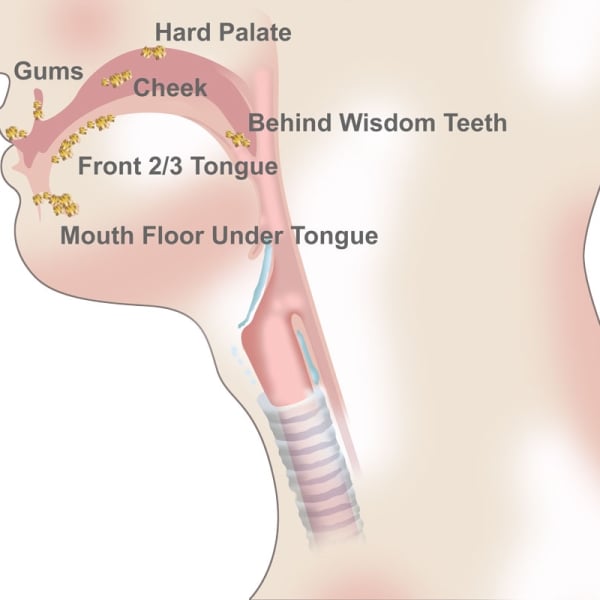
Lip and oral cancer includes the lips, the front two-thirds of the tongue, the gums, the lining inside the cheeks and lips, the floor (bottom) of the mouth under the tongue, the hard palate (bony top of the mouth), and the small area of the gum behind the wisdom teeth.
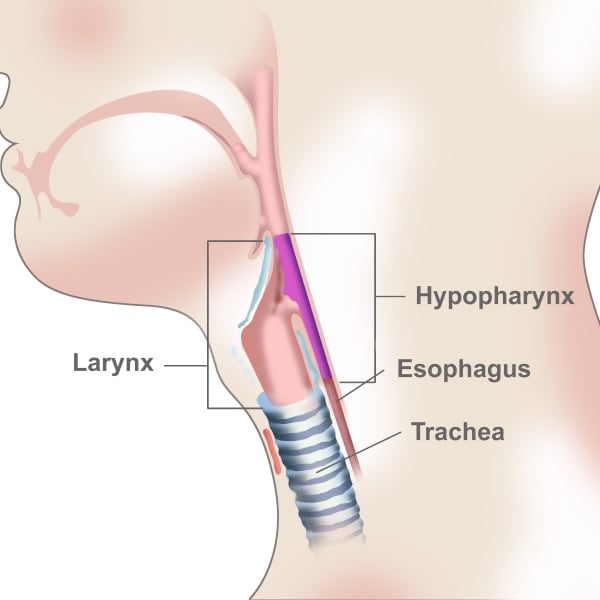
The pharynx (throat) is a hollow tube about 5 inches long that starts behind the nose and leads to the esophagus. It has three parts: the nasopharynx (the upper part of the pharynx, behind the nose); the oropharynx (the middle part of the pharynx, including the soft palate [the back of the mouth], the base of the tongue, and the tonsils); the hypopharynx (the lower part of the pharynx).
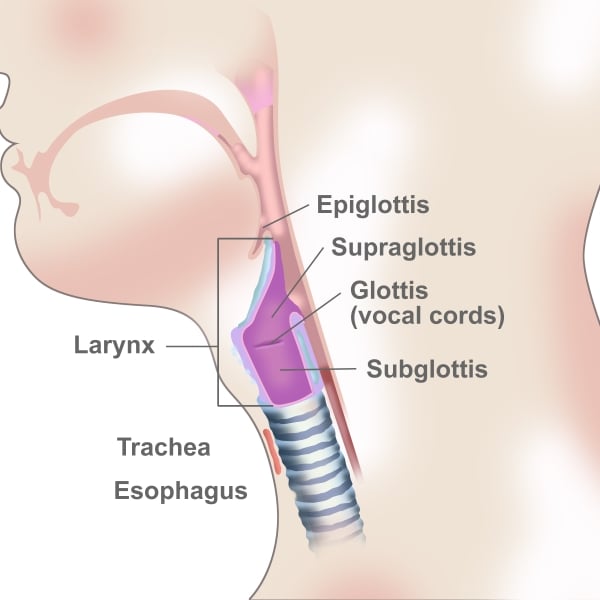
The larynx, also called the voicebox, is a short passageway formed by cartilage just below the pharynx in the neck. The larynx contains the vocal cords. It also has a small piece of tissue, called the epiglottis, which moves to cover the larynx to prevent food from entering the air passages.
Paranasal Sinuses and Nasal Cavity
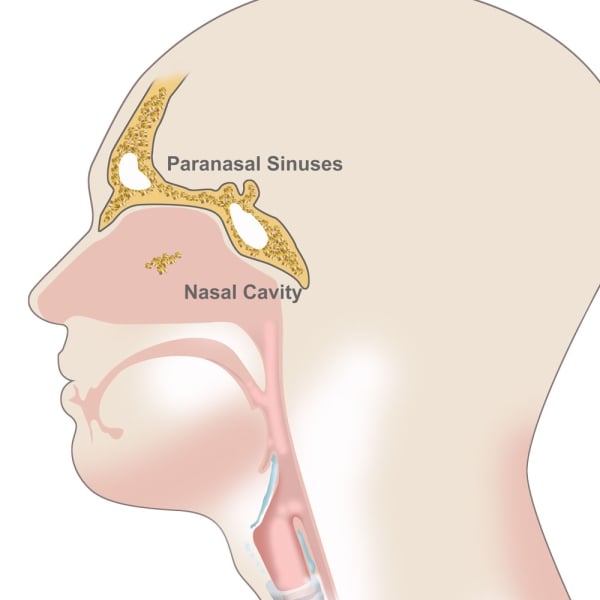
The paranasal sinuses are small hollow spaces in the bones of the head surrounding the nose. The nasal cavity is the hollow space inside the nose.
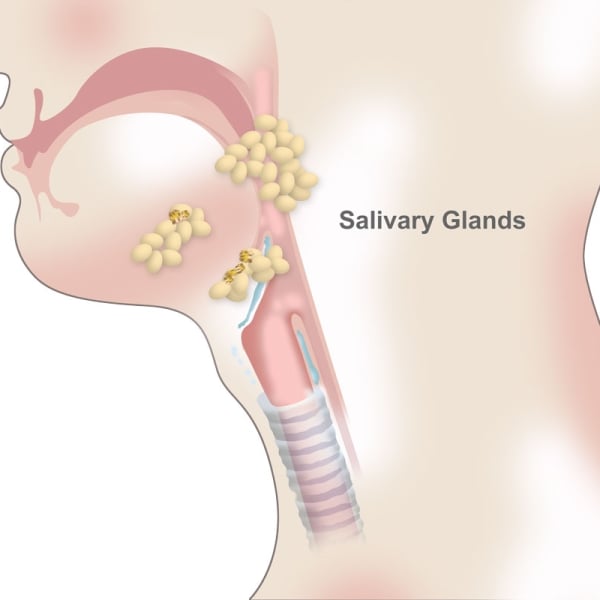
Salivary Glands
The major salivary glands are in the floor of the mouth and near the jawbone. The salivary glands produce saliva. Salivary glands contain many different types of cells that can become cancerous, so there are many different types of salivary gland cancer.
Cancers of the brain, the eye, the esophagus, and the thyroid gland, as well as those of the scalp, skin, muscles, and bones of the head and neck, are not usually classified as head and neck cancers.
Sometimes, cancerous squamous cells can be found in the lymph nodes of the upper neck when there is no evidence of cancer in other parts of the head and neck. When this happens, the cancer is called metastatic squamous neck cancer with unknown (occult) primary. More information about this cancer type can be found in Metastatic Squamous Neck Cancer with Occult Primary (PDQ®).
Signs and Symptoms of Head and Neck Cancers
The mouth, nose, and throat are the most common areas affected by cancers in the head and neck. Symptoms typically depend on where the cancer develops and how it spreads. Some common signs and symptoms can include:
- A lump in the cheeks or on the necks
- Mouth sores that do not heal or go away
- Difficulty and/or pain when chewing or swallowing
- Change or hoarseness in the voice that isn’t related to a virus (ie, cold or flu) or bacterial infection (ie, strep throat)
- Swelling of the jaw
- White or red patches on the gums, tongue, or lining of the mouth
- Chronically blocked sinuses or sinus infections
Keep in mind that many of these symptoms can occur even if there is no cancer present. In many cases, they are due to some other condition; however, this cannot be confirmed without an examination. If you experience these symptoms, especially if they recur or persist for more than two weeks, see your doctor. If the concern is inside your mouth, make an appointment to see your dentist.
Head and Neck Cancer Risk Factors You Can Change
- Tobacco use
- Alcohol use (especially if you smoke too)
- Human papillomavirus (HPV)
The good news is you can make lifestyle changes to help reduce your risk of developing head and neck cancer. Limit alcohol use or consider cutting it out completely, talk to your doctor about the HPV vaccine, and stop tobacco use. The sooner you quit tobacco, the more you also reduce your risk of developing lung cancer. Watch our video to learn more about the health benefits of quitting smoking.
Head and Neck Cancer Risk Factors You Cannot Change
- Being Male. Men are more likely to develop head and neck cancer than women.
- Being over the age of 55, as this is when most diagnoses occur.
Treatment options and prognosis are based on what type of head and neck cancer is present and what stage it is. Virginia Oncology Associates offers an integrated team-oriented approach to provide you with the best possible care. We are also eager to explain the facts and answer your questions at every step along the way.
With locations spanning the southeast region of Virginia and Northeastern North Carolina, Virginia Oncology Associates is able to extend state-of-the-art cancer treatment to patients in a caring and comfortable environment close to home, work, and family.